Introduction
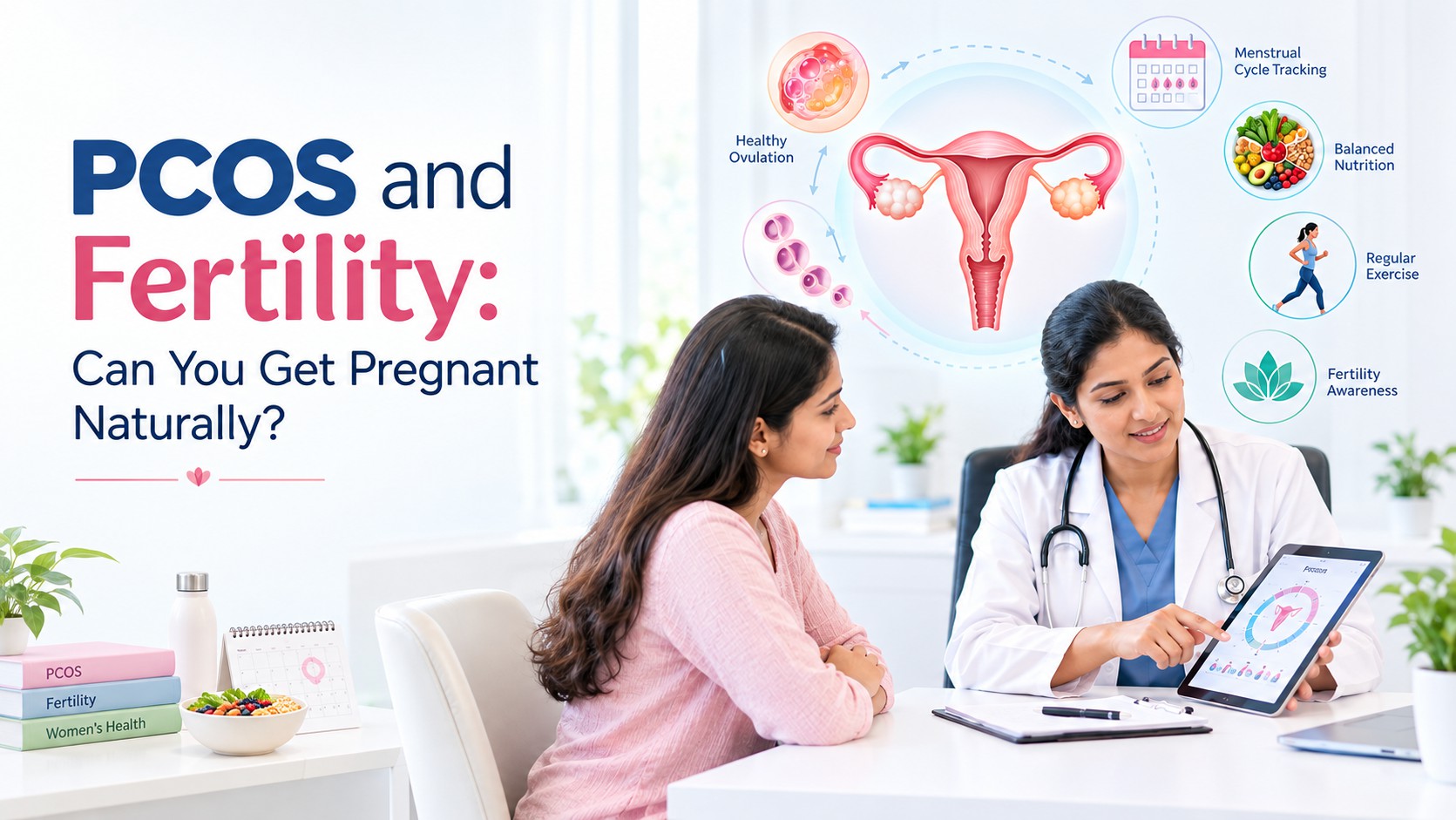
Many women who are diagnosed with Polycystic Ovary Syndrome (PCOS) are concerned about their ability to conceive. One of the most common questions is, "Can I conceive naturally with PCOS?" The good news is that PCOS does not necessarily indicate infertility. Many women with PCOS conceive naturally, but others may require medical intervention to regulate ovulation.
PCOS can lead to irregular periods and ovulation, making it more difficult to conceive. With appropriate PCOS management, healthy lifestyle habits, fertility awareness, and timely medical help, many women can achieve a successful pregnancy.
If you are looking for guidance from the Best Gynecologist in Hyderabad for PCOS, irregular periods, or fertility concerns, an individualized evaluation can help identify the right approach for your situation.
What Is PCOS, and How Does It Affect Fertility?
Polycystic Ovary Syndrome (PCOS) is a common hormonal and metabolic disorder that affects women during their reproductive years. It can cause irregular periods, high androgen levels, acne, excessive hair growth, weight problems, and ovulation issues.
One of the main reasons PCOS affects fertility is irregular ovulation. Some women with PCOS may ovulate less frequently, while others may not ovulate regularly at all.
Ovulation is important because to be able to get pregnant, you need to release an egg that can be fertilized by sperm. When ovulation is unpredictable, it's more difficult to identify the fertile window and time intercourse.
However, having PCOS does not mean that you cannot ovulate or become pregnant.
Can You Get Pregnant Naturally With PCOS?
Yes, natural pregnancy with PCOS is possible.
Most women with PCOS do get pregnant without fertility treatment, especially if they are ovulating. Your chances of getting pregnant vary depending on a number of factors, including:
- Frequency of ovulation
- Age
- Menstrual cycle regularity
- Ovarian and reproductive health
- Fallopian tube health
- Sperm health of your partner
- Overall metabolic and lifestyle factors
Some women may conceive naturally after making lifestyle changes and learning more about their menstrual and ovulation cycles. Others may require medication to induce ovulation.
Therefore, a PCOS diagnosis should not be viewed as a diagnosis of permanent infertility.
Why Does PCOS Make It Difficult to Get Pregnant?
1. Irregular Ovulation
Irregular ovulation is one of the most important reasons for PCOS and infertility. If ovulation occurs only occasionally, there may be fewer opportunities for an egg to be fertilized.
2. Hormonal Changes
PCOS can involve hormonal changes, including higher androgen levels and altered reproductive hormone activity. These changes can interfere with normal follicle development and ovulation.
3. Irregular or Missed Periods
Women with PCOS may experience long menstrual cycles, irregular periods, or missed periods. While irregular periods do not necessarily mean infertility, they can indicate that ovulation is not happening consistently.
4. Metabolic Factors
Insulin resistance can occur in women with PCOS and may contribute to hormonal and metabolic changes. Managing overall metabolic health is therefore an important part of PCOS treatment and fertility care.

How to Improve Your Chances of Getting Pregnant Naturally With PCOS
1. Understand Your Ovulation Pattern
Knowing whether and when you ovulate can be helpful when trying to conceive.
Tracking your menstrual cycle, cervical mucus changes, and using ovulation predictor tests may provide useful information.
However, because PCOS can cause irregular cycles, ovulation prediction may not always be accurate. If you are unsure whether you are ovulating, your gynecologist can recommend appropriate tests or monitoring.
2. Follow a Balanced Diet
There is no single diet that works for every woman with PCOS. Instead, focus on sustainable, balanced nutrition.
Try to include:
- Vegetables and fruits
- Whole grains
- Protein-rich foods
- Healthy fats
- Fiber-rich foods
- Adequate fluids
Avoid extreme diets or unnecessary food restrictions. A healthy eating pattern can support overall metabolic health while you are preparing for pregnancy.
3. Exercise Regularly
Regular physical activity can support metabolic health, cardiovascular fitness, energy levels, and overall well-being.
Activities such as walking, strength training, swimming, cycling, and yoga can be incorporated into your routine according to your fitness level and medical needs.
4. Maintain a Healthy Lifestyle
Good sleep, regular exercise, balanced nutrition, stress management, and appropriate weight management can all form part of a healthy PCOS fertility plan.
It is important to remember that PCOS affects women differently. Fertility problems can occur in women of different body sizes, so fertility care should never focus on weight alone.
5. Take Care of Your Preconception Health
If you are planning pregnancy, discuss your health and medications with your gynecologist. Your doctor may recommend appropriate preconception care, including folic acid supplementation and assessment of conditions such as blood pressure or blood sugar problems.
When Should You See a Doctor for PCOS and Fertility?
If you have PCOS and are trying to conceive, you do not necessarily need to wait a long time before discussing your fertility.
Consider consulting a gynecologist or fertility specialist if:
- Your periods are very irregular or absent
- You are unsure whether you are ovulating
- You have been trying to conceive without success
- You have a history of miscarriage
- You have another reproductive health condition
- You are concerned about age-related fertility
- Your partner may have a fertility concern
A fertility evaluation can help identify whether irregular ovulation is the main issue or whether another factor could be affecting conception.
Depending on your situation, your doctor may assess ovulation, hormones, ovarian function, the uterus, and fallopian tubes. Male fertility factors may also be evaluated because fertility involves both partners.
If you have been trying to conceive without success, consulting a Best Doctor for Infertility Treatment Near Me can help evaluate both female and male fertility factors.
PCOS Fertility Treatment Options
If lifestyle changes alone do not result in pregnancy and you have irregular or absent ovulation, fertility treatment may be considered.
Ovulation Induction
For women with PCOS-related infertility caused by lack of ovulation and without other infertility factors, letrozole is recommended as a first-line medication for ovulation induction in current international guidelines.
Other medications, including clomiphene or metformin in selected situations, may be considered depending on the individual's medical history and fertility needs.
These medicines should only be taken under appropriate medical supervision.
Intrauterine Insemination
IUI may be considered in selected fertility situations, particularly when ovulation induction and timed intercourse have not resulted in pregnancy or when other fertility factors are present.
IVF Treatment
IVF for PCOS may be considered when other fertility treatments have not been successful or when there are additional reasons to recommend IVF.
Having PCOS does not automatically mean you need IVF. A fertility specialist can help determine which treatment is appropriate based on your individual circumstances.
PCOS and Pregnancy: What Should You Know?
Once pregnancy occurs, appropriate antenatal monitoring becomes important. Choosing the Best Pregnancy Care Doctor in Hyderabad can help support pregnancy care and monitor relevant health concerns.
Before and during pregnancy, your healthcare provider may recommend monitoring your blood pressure, blood sugar, medications, nutrition, and overall health.
If you have PCOS and are planning pregnancy, preconception counselling can help you understand how to prepare your body and manage any existing health concerns.
Common Mistakes to Avoid When Trying to Conceive With PCOS
Assuming PCOS Means You Cannot Get Pregnant
PCOS can affect ovulation, but it does not automatically mean infertility. Avoid losing hope simply because you have received a PCOS diagnosis.
Depending Only on Period-Tracking Apps
PCOS can make cycles unpredictable, so an app may not accurately identify your fertile days. Consider additional ovulation tracking methods or medical assessment when needed.
Following Extreme Diets
Very restrictive diets are not necessary for every woman with PCOS. Focus instead on balanced, sustainable nutrition.
Taking Fertility Medicines Without Medical Advice
Fertility medications can have specific indications and monitoring requirements. Avoid self-medication and discuss treatment options with a qualified doctor.
Frequently Asked Questions About PCOS and Fertility
1. Can I get pregnant naturally if I have PCOS?
Yes. Many women with PCOS become pregnant naturally, especially when ovulation occurs. PCOS may make conception more difficult or unpredictable, but it does not automatically cause infertility.
2. Does PCOS mean I am infertile?
No. PCOS is a common cause of irregular ovulation, but many women with PCOS can conceive naturally or with appropriate fertility treatment when required.
3. How can I know if I am ovulating with PCOS?
Irregular periods can make ovulation difficult to predict. Cycle tracking, ovulation predictor kits, and medical monitoring can help determine whether ovulation is occurring.
4. Can lifestyle changes improve fertility with PCOS?
Healthy nutrition, regular physical activity, good sleep, and appropriate lifestyle management can support reproductive and metabolic health. Individual results can vary.
5. Is letrozole used for PCOS infertility?
Yes. Letrozole is recommended as a first-line ovulation-induction medicine for many women with PCOS-related anovulatory infertility when there are no other infertility factors.
6. When should I see a fertility specialist for PCOS?
Consider medical evaluation if your periods are very irregular, you are not ovulating, or you have been trying to conceive without success. Earlier assessment may be appropriate when other fertility factors are suspected.
Conclusion
PCOS does not mean you cannot become pregnant. Many women with PCOS conceive naturally, while others may benefit from ovulation support or additional fertility treatments.
Understanding your ovulation pattern, maintaining healthy lifestyle habits, preparing your body for pregnancy, and seeking timely medical guidance can help you make informed decisions about your fertility journey.
If you are experiencing PCOS-related concerns or planning for pregnancy, consulting a qualified gynecologist or fertility specialist can help you understand your options and take the right steps forward.